
Key Takeaways
What you'll learn in this definitive guide to AI-generated commercials.
Creative Revolution
AI has become a creative partner, generating ideas, scripts, and visuals for commercials with unprecedented speed and scale.
Hyper-Personalization
Produce thousands of ad variants tailored to viewers' individual preferences, emotional state, and cultural context in real-time.
Ethical Imperatives
Navigate data privacy, algorithmic bias, and manipulation risks with a clear ethical framework for responsible AI advertising.
Future of AI Ads
Fully autonomous generative AI campaigns and pro-sumer advertising are reshaping the industry by 2026 and beyond.
A New Era for Advertising: What AI Means for Commercials
The phrase 'artificial intelligence commercials' has gone from a futuristic buzzword to a real-world disruptor. The global AI in marketing market is expected to exceed US$100 billion by 2026 — a testament to AI's transformative influence on the entire advertising industry.
Unlike traditional advertising that relies on broad demographic targeting and longer creative cycles, AI-powered advertising leverages machine learning and generative approaches to deliver unprecedented precision and personalization. It enables brands to shift from one-to-many to genuine one-to-one conversations, at scale.
This guide dives deeper than the basics — covering not just examples, but comprehensive frameworks for implementation, evaluation, and ethical consideration to help you outrank and outpace the competition.
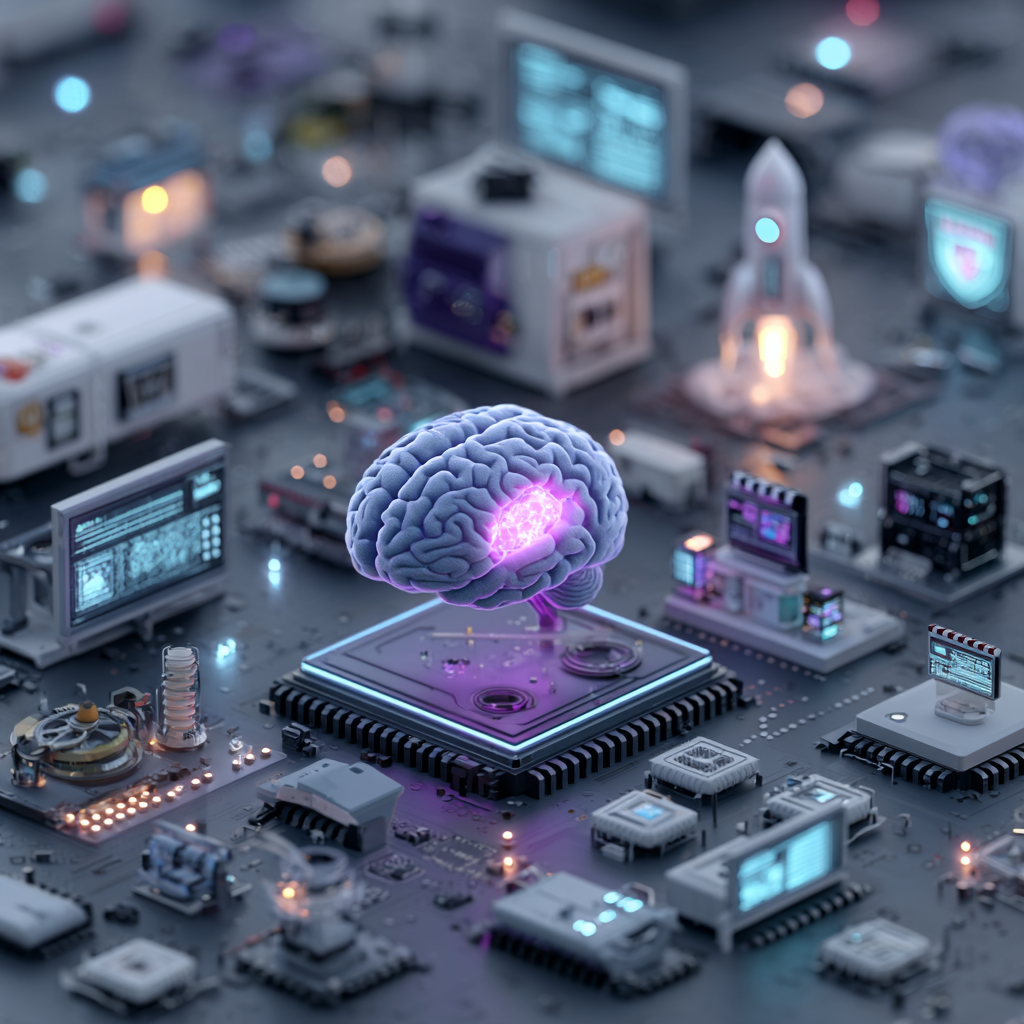
A New Era for Advertising: What AI Means for Commercials
The phrase 'artificial intelligence commercials' has gone from a futuristic buzzword to a real-world disruptor. The global AI in marketing market is expected to exceed US$100 billion by 2026 — a testament to AI's transformative influence on the entire advertising industry.
Real-World Examples of AI Commercials in Action
Three landmark campaigns that redefined what's possible with AI-generated advertising.
Coca-Cola "Create Real Magic" — Generative AI at Scale
Integrated OpenAI's DALL-E 2 and GPT-4 to create a platform where fans generated original artwork using iconic brand IP. This turned passive observers into active co-creators, building a massive organic content repository.
💡 Instead of using AI to create ads for your audience, build a platform where your audience creates with you — generating organic content while building an incredible brand community and sense of ownership.
Lexus "Driven by Intuition" — AI-Scripted Storytelling
The world's first commercial scripted entirely by AI, trained on 15 years of award-winning car and luxury brand commercials to master the subtle patterns of emotional storytelling.
💡 Treat AI as a creative muse. Feed it successful campaigns from your industry to discover hidden narrative structures, visual motifs, and emotional arcs that resonate with your target audience.
Under Armour "I WILL" — Dynamic Personalization
Used IBM Watson AI to create personalized training ads drawing from users' specific exercise goals, previous workout history, and local weather conditions — turning ads from interruptions into useful advice.
💡 Integrate your AI advertising engine seamlessly with your customer data platforms. The more data points available, the more personalized and impactful the resulting commercial will be for each individual viewer.
The AI Ad Creation Lifecycle: A Step-by-Step Guide
Creating an AI commercial isn't pressing a single 'generate' button. Here's the proven step-by-step framework your team can use in practice.
Step 1: Strategic Foundation & Data Integration
Define clear campaign objectives before any creative work begins. Connect your CRM, website traffic, social media engagement, and third-party market intelligence. Use AI-driven data enrichment tools to cleanse and enrich your dataset for quality signals.
Step 2: Audience Insight & AI Segmentation
Go beyond demographics using clustering algorithms and predictive analytics. AI uncovers nuanced 'micro-tribes' based on behavior, psychographics, and predictive intent — audience segments that traditional methods completely miss.
Step 3: Generative AI Creative Development
Use GANs for visuals and LLMs like GPT-4 for text. Write specific, detailed prompts. Establish a human-AI feedback loop where your creative team rates output, training the model toward your brand voice and aesthetic.
Step 4: Dynamic Asset Generation & Assembly
Use DCO (Dynamic Creative Optimization) platforms to programmatically assemble ad components — different voiceovers, music tracks, imagery styles, and CTAs — building the optimal commercial for each viewer segment in real-time.
Step 5: Intelligent Distribution & Real-Time Optimization
Run commercials through programmatic advertising channels. Enable AI to predict ad fatigue before performance drops, swap in fresh creative automatically, and reallocate budget toward the winning creative-audience-placement combinations.
The AI Ad Creation Lifecycle: A Step-by-Step Guide
Creating an AI commercial isn't pressing a single 'generate' button. Here's the proven step-by-step framework your team can use in practice.
Evaluating Success: The A.C.T.I.V.E. Framework
Standard metrics like CTR and conversion rate don't capture the full impact of AI advertising. Use this 6-component framework for comprehensive strategic assessment.
Audience
How well did the AI identify and engage new, high-value audience segments? Were previously unconverted micro-tribes reached? What is the sentiment score among newly engaged segments?
Creative
What was the variety and uniqueness of generated creative assets? Did AI surface ideas your human team hadn't considered? How much better did AI-generated creative perform versus human-only creative?
Targeting
How precise and effective was the personalization? What was the performance differential between the top 1% most personalized ads versus the bottom 50%? How did CPA respond to increased personalization?
Impact
What was the actual business impact beyond vanity metrics? Did the campaign drive additional brand search volume? Did it increase customer lifetime value (CLV) for targeted segments?
Velocity
How much did AI compress the creative and testing lifecycle? What was the reduction in time from brief to go-live? How many more creative variations could you test compared to previous campaigns?
Ethics
Did the campaign operate responsibly, transparently, and fairly? Were models audited for bias? Are you honest with consumers about their data use? Does the personalization feel helpful or intrusive to recipients?
Ready to Create Your First AI Commercial?
NewFace AI's AI-powered platform lets you generate, personalize, and deploy high-converting commercials at scale — no production budget required.
The Ethics of AI Advertising: A Responsible Framework
The tools that enable amazing personalization can also create manipulation, discrimination, and erosion of trust. Navigating these core ethical challenges is essential.
Algorithmic Bias
AI models trained on historical data can amplify existing societal biases — showing high-paying job ads only to men, for instance. Conduct regular audits using tools like IBM's AI Fairness 360 and ensure training data is diverse and representative.
Data Privacy & Surveillance
The drive for more data can slide from personalization into surveillance capitalism. Give users clear, understandable explanations of why they see certain ads, and allow meaningful control over their data and personalization preferences.
Manipulation & Vulnerability
AI could recognize and exploit user vulnerabilities — targeting people showing signs of depression or loneliness with manipulative messaging. Ensure your personalization creates genuine value for the consumer, not just the marketer.
The 'Black Box' Problem
Many advanced AI models can't explain their own decisions, making bias audits and consumer transparency difficult. Establish cross-functional ethics committees with authority to review and halt high-stakes campaigns when needed.
The Future of AI Commercials: 2026 and Beyond
The pace of innovation is staggering. These emerging trends will define the next generation of AI-powered advertising.
Fully Generative Campaigns
Input a campaign goal and AI returns a complete strategy, creative assets, media plan, and optimization protocol — moving from component-level AI use to end-to-end campaign generation.
Real-Time Emotional Adaptation
Future AI commercials will adapt in real-time using computer vision and sentiment analysis. If a viewer seems confused, the AI simplifies the message; if engaged, it doubles down on what's working.
Synthetic Influencers
AI-generated avatars will become more sophisticated and cost-effective, allowing brands to create synthetic brand ambassadors with perfectly aligned values, available 24/7 without endorsement risks.
Pro-sumer Advertising
As AI tools become universally accessible, consumers will create commercials for brands they love. Smart brands will monitor this user-generated content and incorporate the best into official marketing strategies.
The Future of AI Commercials: 2026 and Beyond
The pace of innovation is staggering. These emerging trends will define the next generation of AI-powered advertising.
Frequently Asked Questions
No — AI will supplement, not replace, human creativity. The future is co-creative: AI handles data processing, pattern recognition, and variation generation at scale, while humans focus on strategy, ethical judgment, and genuinely novel thinking. Human-AI collaboration consistently produces the best results.
Costs vary dramatically. Experimenting with off-the-shelf generative AI tools may cost a few hundred dollars in subscriptions. Deploying a full enterprise-level DCO platform with programmatic distribution can run into hundreds of thousands. Start small, prove ROI, then scale your investment.
Prompt engineering is rapidly becoming an essential skill — the art and science of asking the right questions and providing the right context to AI to determine output quality. Data literacy and ethical reasoning are equally vital for effective AI advertising.
Many powerful tools are widely accessible. Use LLMs like GPT-4 for script brainstorming and ad copy. Generate original visuals with image generators like Midjourney. Leverage AI video tools like RunwayML for streamlined production. You don't need a large budget to start creating effective AI commercials.
A GAN consists of two competing neural networks — a Generator that creates new content (images, video) and a Discriminator that judges if they're real or synthetic. This adversarial competition makes the Generator increasingly skilled at producing realistic outputs, powering many AI image and video generation applications.
Focus on the value exchange. Personalization that surfaces a product a user would genuinely love or solves a real problem feels helpful and welcome. Personalization that merely reflects private data back without clear benefit feels intrusive. Stay useful, don't overstay your cleverness.
A.C.T.I.V.E. stands for Audience, Creative, Targeting, Impact, Velocity, and Ethics. It's a comprehensive 6-component scorecard for evaluating AI commercial campaigns beyond simplistic metrics like CTR, capturing the true strategic value and ethical standing of your advertising investment.
Great starting points include the AI Marketing Institute and thought leaders like Paul Roetzer and Christopher S. Penn. Explore documentation from major AI platforms including OpenAI, Google AI, and IBM Watson for technical depth. Also follow industry publications like Marketing AI Institute for the latest 2026 developments.
Start Creating AI Commercials That Convert
Join thousands of brands already leveraging NewFace AI's AI-powered commercial creation platform. From generative scripts to dynamic video production — create, test, and scale campaigns that deliver real ROI.